A practitioner who meets you
where you actually are,
and works from there.
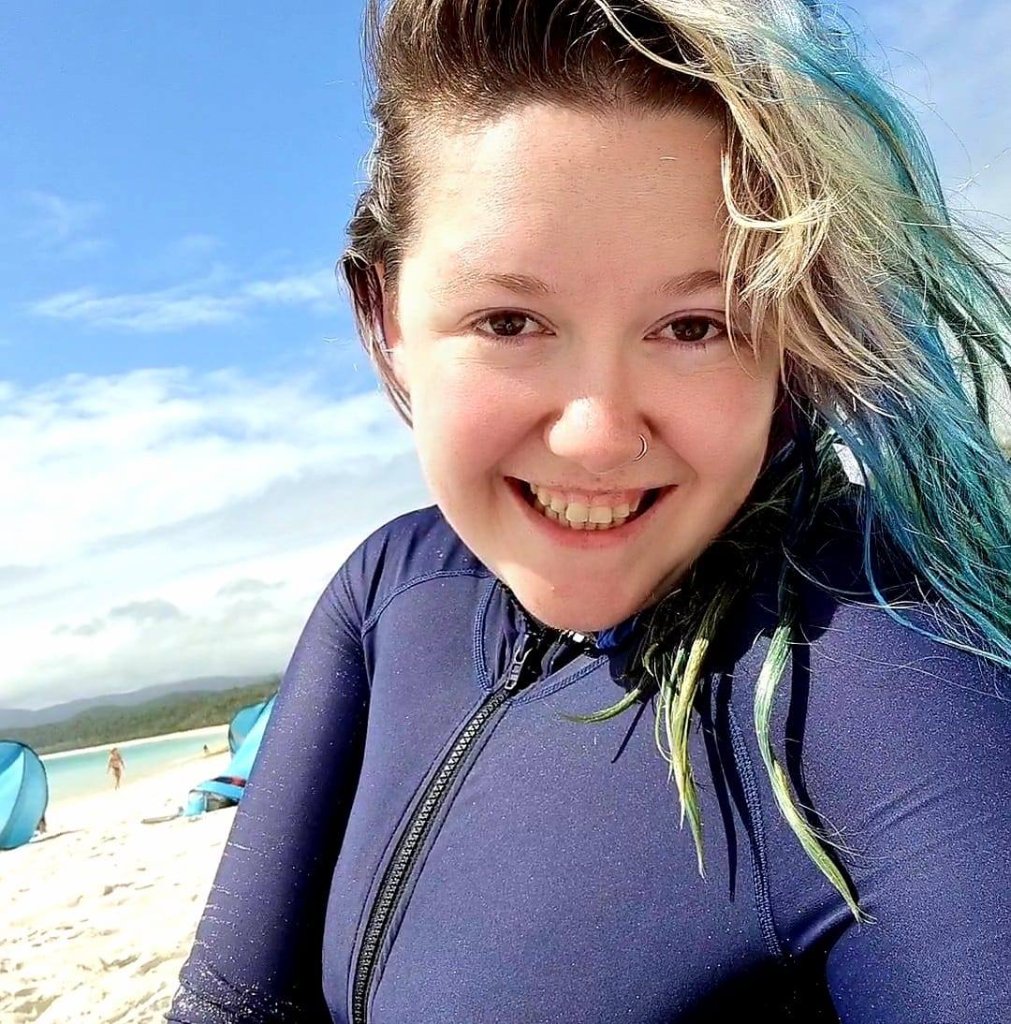
I'm Naomi, a qualified Career Development Practitioner based in Melbourne. My career has moved across higher education, international student recruitment, travel industry leadership, and now private practice. None of it was linear. That's a big part of why I understand the kinds of transitions people come to me with.
Before working in universities, I spent years in the travel industry helping people plan backpacking adventures, working holidays, volunteer placements, and world tours. I've volunteered in Australia and internationally, visited every continent but one (Antarctica is on the list 🐧), worked while travelling, and studied while working. I've also built a full life alongside all of that - family, relationships, personal growth - and a career that hasn't stopped evolving.
I've also navigated some of the harder things life throws at people. I know what it's like to keep moving when the path isn't clear. That sits underneath everything I do. Not as something I lead with, but as the reason I can be in a conversation with someone going through something difficult and not flinch.
I built this because your career is tangled up in your health, your relationships, your money, your confidence, and everything else, and I wanted to build a practice that actually takes all of that seriously.
The work that gets me out of bed is helping someone pursue what's actually in their heart. The dream that doesn't feel practical, the path that doesn't have a neat label, the version of a career and life that's unmistakably theirs. The thing that keeps surfacing despite every practical reason to ignore it. That's what I want to help people find.
The best part of this work is when someone learns something about themselves they didn't know, or navigates a process they thought was going to be awful, or walks away feeling settled about where they're headed. That's the whole point.
The Long Haul Careers is built on a simple conviction: people deserve a life full of meaning and material stability, and they shouldn't have to sacrifice one for the other. That's what this practice is here to help with.
I work from five evidence-based frameworks: Chaos Theory of Careers, Happenstance Learning Theory, Motivational Interviewing, Narrative Counselling, and the Transtheoretical Model. Together they cover a lot of important ground - where someone is, how they deal with uncertainty, and what helps them actually move. Each one covers ground the others can’t. There's more detail on each one further down the page.
If any of that sounds like what you need, I'd love to work with you. Join the waitlist and we'll start there.
Properly qualified, and serious about keeping it that way.
Career counselling is unregulated in Australia, so here's exactly what sits behind the work you'd be doing with me.

Australia's peak national body for career practitioners. CICA membership requires demonstrated qualifications, professional development, and adherence to a code of ethics.
Professional association for formally qualified career counsellors. ACCE membership reflects specialist training in counselling approaches applied to career development.

The international professional body for careers practitioners, connecting Australian practice to global evidence and standards.

Ten-plus years spanning admissions, student advice, pathway planning, international recruitment, and transnational education across four Victorian universities. I understand the higher education landscape deeply; I know how to help people navigate it with confidence.

A formally qualified careers practitioner with specific training in the evidence-based frameworks that underpin everything The Long Haul Careers does. Career development and counselling qualifications behind every session, plus registration, professional membership and a code of ethics.

As a member of professional associations, I'm bound by codes of ethics covering confidentiality, informed consent, and client-centred practice. You're safe here.
I've lived a non-linear path.
Every twist, detour, and pivot brought me here. Scroll to walk the trail.
Five theories. One integrated approach.
Click each theory to understand how it shows up in practice, and why the combination works better than any single framework alone. If you'd like to see how this shows up in a session, the career support page has the detail.
Why these five, and why in combination? Most practitioners work primarily within one or two frameworks. But I don't believe a single method can suit every human being, or even one person across every moment of a conversation. People aren't static, and neither are the things that drive or block them.
Together, these five theories cover readiness, motivation, relationship to change, self-narrative, and growth conditions - important pieces of how a person moves through a career decision. Each was developed independently, in different fields. That breadth is the point. And my own approach keeps evolving too; I learn as much from every client as I hope they learn from me.
Other frameworks I draw on
The five theories above shape how I think about career development as a whole. In practice, I also draw on a few other frameworks that help structure the conversation and make sure we’re covering the ground that matters.
DOTS
Law & Watts (1977)
Helps us work through four areas: self-awareness, opportunity awareness, decision learning, and transition learning. It’s a useful way to figure out where to focus in a session.
Australian Blueprint for Career Development
National framework
Gives us a shared language for career management competencies across different life stages. It’s the national framework that underpins a lot of career education in Australia.
What working with me actually feels like
A conversation with someone who asks the right questions, knows the landscape, and stays with you until the next step makes sense. You leave with options you can see clearly, answers in your own words, and a plan you chose for yourself.

Warm, direct, and real. You'll feel like you're talking to a person who listens, and who gets it.
Your pace, your constraints, your circumstances; all of it belongs in the conversation. We begin where you actually are, not where you think you should be.
Whatever your situation, none of it disqualifies you from a meaningful path forward.

You leave with actual next steps based on your specific situation, grounded in where you are right now.
I'm not going to be the right fit for everyone, and I think that's worth saying. Good career counselling depends on a real connection - on feeling like you can actually talk to the person across from you. The free chat at the start exists partly for that reason. If we're not the right match, I'll point you toward someone who might be. No awkwardness.